


In the Press...
APP'What bullies do': Rep. Smith is sanctioned by the Chinese for highlighting human rights abusesNJ Congressman pointed out nation's human rights abuses
By Mike Davis of the Asbury Park Press
U.S. Rep. Chris Smith, R-N.J., was sanctioned by the Chinese government on Monday in a retaliatory move, after the U.S. placed sanctions on Chinese leaders over human rights abuses. The sanctions filed against Smith, U.S. Sen. Ted Cruz, R-Texas, Sen. Marco Rubio, R-Fla., and Sam Brownback, the U.S. ambassador for international religious freedom, bars them from the country, Chinese foreign affairs ministry spokeswoman Hua Chungying said Monday. She did not provide any further details about the sanctions. "I'm not scared. I'm angry. This is what bullies do," Smith said in an interview Monday. "In no way will this diminish what I do. And in many ways, it's causing me to want to do even more. Because if they can do this to members of Congress, think of what they could do to a Muslim leader or a person out in rural China." Last week, the Trump Administration issued sanctions of its own against four Chinese officials, including a senior member of the ruling Communist party, over human rights abuses against the Uighur Muslim minority population in China's Xinjiang province, including forced sterilization. On July 1 Smith testified during a House hearing on a new Chinese "security law" in Hong Kong, which institutes lengthy prison sentences for protesters advocating for democracy.
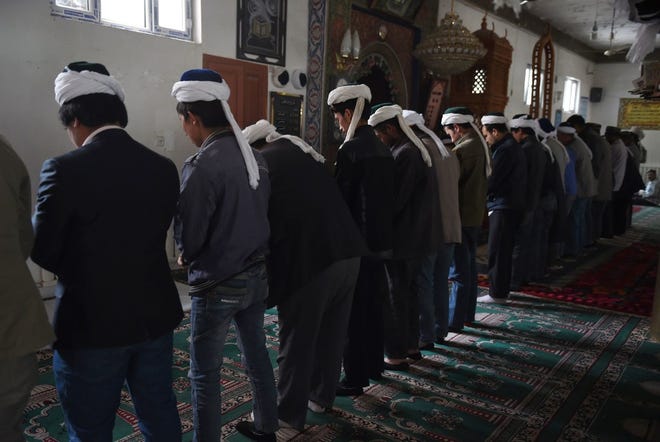
"(Chinese President) Xi Jinping continues to commit pervasive human rights abuses against the Chinese people, including the use of torture, which has been well documented over and over again by the special rapporteurs of the United Nations," Smith testified. "They're going after them to destroy their children, destroy their families. … There's an all-out effort to end all religious practice unless it comports with Marxist principles. "It is going from bad to worse," he said. The sanctions against U.S. officials were expected. In May, the Global Times — a Chinese newspaper owned by the Communist party — reported that the government was "considering punitive countermeasures against U.S. individuals, entities and state officials. "China won't just strike back symbolically, but will impose countermeasures that will make them feel the pain," the newspaper reported. Earlier this month, the FBI briefed Smith on the threatened "pain," including bribes to attack Smith's reputation and coordinated disinformation on social media. Smith's office has already fought to remove fake accounts with his likeness from Twitter, Smith said. "It's become a new normal — a new abnormal," Smith said. Smith has introduced numerous bills in the last 30 years related to human rights abuses in China, including the Hong Kong Human Rights and Democracy Act, which imposed sanctions on the Chinese government for its actions against democratic activists in Hong Kong. President Donald Trump signed that bill into law in November. Last year, Smith introduced a bill specifically calling for the condemnation of the human rights abuses against Muslims in Xinjiang. “We urge the U.S. side to immediately revoke the wrong decision and stop any words and deeds that interfere in China’s internal affairs and harm China’s interests,” said Hua Chunying, spokeswoman for the Chinese foreign ministry, during a Monday news briefing. “China will make further response according to the development of the situation.” Smith, 67, was planning to travel to China once the COVID-19 pandemic is abated, specifically to visit Hong Kong, Beijing and Urumqi, the capital of Xinjiang. It's not the first time Smith has been targeted by the Chinese government. He wasn't allowed to visit the country for nine years after criticizing the Chinese government for covering up human rights abuses during the 2008 Summer Olympics in Beijing. "They were rounding up all the human rights activists so they couldn't talk to journalists," Smith said. "I spent four or five days there. I had press conferences. We put together a political prisoners list. And sure enough, when we left, I was told 'you're not coming back.'" Before the sanctions came down, Smith was already working on a bill that would remove a nation from the U.S. "most-favored nation" trade list if there wasn't "significant progress" on human rights. Similar language was included in a 1993 executive order issued by then-President Bill Clinton. When it was rescinded, "we lost China as a human rights democracy," Smith said. "If we just had a principled view that we're not going to trade with a dictatorship unless there's human rights progress ... we would empower the people to have a stronger voice," Smith said. "Where's the hope going to come from? Where's the democracy going to come from?" The relationship between China and the U.S. has deteriorated over the coronavirus pandemic, human rights, trade and Beijing's policy toward Hong Kong, where it has moved to erode the territory's separate judicial system from mainland China's. Beijing and Washington have agreed to the first phase of a trade deal. However, the second part of the agreement has stalled amid the heightened tensions.
|