In the Press...
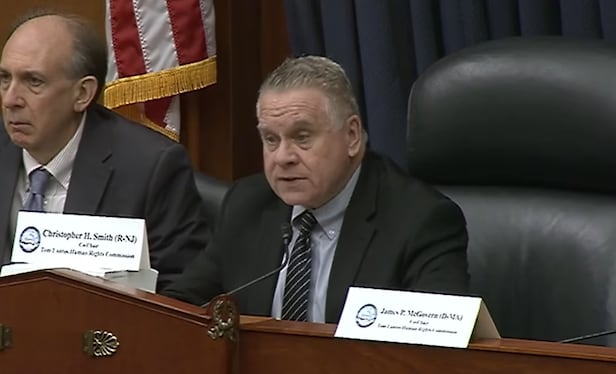
The Chosun Daily article on Smith's TLHRC hearing'U.S. Congress Hearing Urges North Korea Human Rights as Core Agenda''Hearing highlights challenges to information inflow and calls for sanctions over defector repatriation violations'By Kim Eun-joong The Tom Lantos Human Rights Commission, a bipartisan human rights organization within the U.S. Congress, held a North Korean human rights hearing on the 28th after several years. At the hearing, titled “North Korean Human Rights Movement: Current Prospects and Obstacles,” Republican Congressman Chris Smith, the commission’s chairman, stated, “North Korea is one of the most oppressive regimes in the world” and criticized it for operating a “horrifying system of repression unimaginable for decades,” enforced through widespread torture, deprivation of freedoms of expression, religion, and movement, extensive digital and social surveillance, arbitrary detention, and a vast system of forced labor camps.
Smith emphasized the importance of information inflow to North Korea, stating, “Information is the force that drives change, and any attempt to block it must be taken most seriously wherever it occurs,” adding, “All efforts by the regime to block information only make that information more precious and powerful.” Suzanne Scholte, chair of the Defense Forum on North Korea, read aloud a testimony from Kim Ji-young, representative of Free North Korea Radio, who said she first secretly listened to an external radio broadcast at the age of 13. Scholte highlighted, “The most powerful force to change North Korea is not military power but information,” and added, “Information changes people, and changed people eventually transform society.” Scholte described the current period as “the most challenging in the history of the North Korean human rights movement.” Radio Free Asia (RFA) and Voice of America (VOA), which played pivotal roles in publicizing North Korea’s human rights situation and facilitating information inflow, have struggled to function properly due to restructuring under the Trump administration’s second term. In South Korea, the survival of various North Korean human rights groups has become uncertain under the Lee Jae Myung government’s policy of engagement with North Korea. Smith criticized measures including the South Korean government’s suspension of broadcasts to North Korea, the abolition of the Ministry of Unification’s human rights office, and legislative support for banning leaflets to North Korea, calling them “actions directly affecting civil society, especially defector-led organizations, which are one of the most effective ways to communicate with North Korean residents.” In a VOA interview after the hearing, Smith mentioned that human rights issues were not properly addressed in past nuclear negotiations and stressed that human rights “must be an absolutely core agenda under any circumstances.” He also stated that follow-up measures, including additional legislation, would be considered following the hearing. Meanwhile, Scholte urged sanctions under the Magnitsky Act regarding the forced repatriation of North Korean defectors, stating, “China is clearly violating the UN Refugee Convention it signed,” and warned, “Defectors forcibly repatriated face torture, imprisonment, and even execution upon returning to North Korea.” |