In the Press...
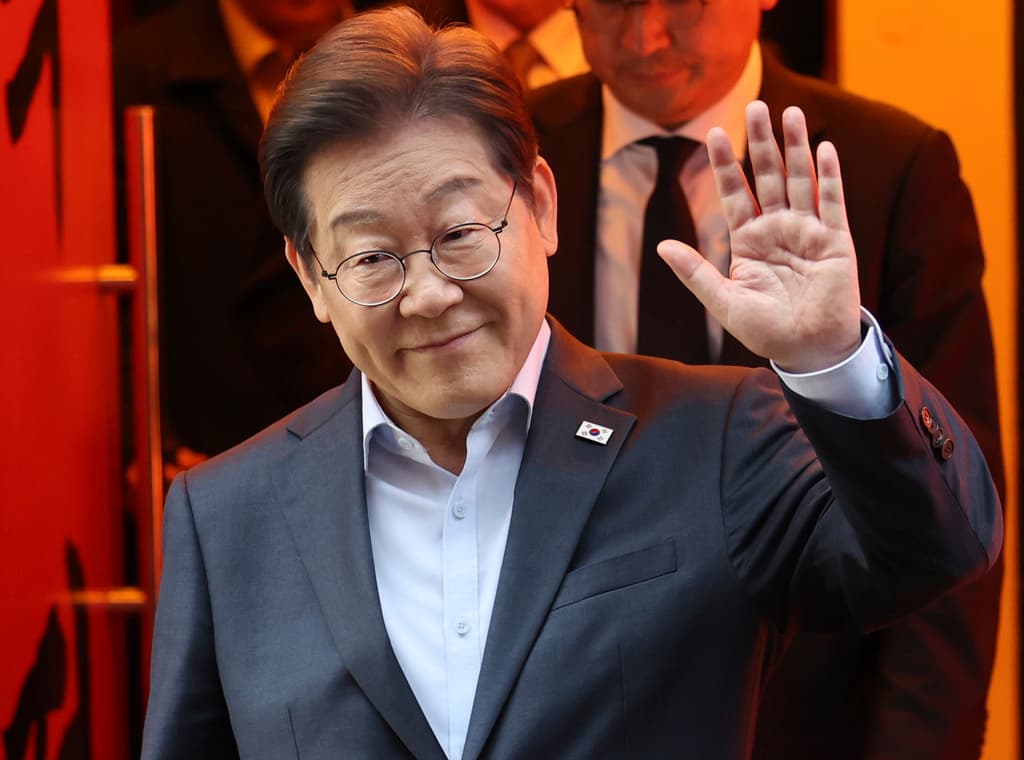
The New York Sun article on Smith's TLHRC hearing'Free Speech on the Brink as South Korean Government Suppresses Criticism of Pyongyang''The head of the North Korean Freedom Coalition says now is "the most challenging time in the history of the North Korean human rights movement."'By Donald Kirk Free speech is in jeopardy in South Korea under the left-leaning government that took power in Seoul nearly a year ago. A former American air force intelligence officer and a member of the academic council of the Victims of Communism Memorial Foundation, Tara O, described the loss of freedom in Korea at a congressional hearing recently conducted by the Tom Lantos Human Rights Commission on rights in both North and South Korea. “There are more and more restrictions on freedom in the Republic of Korea — restrictions on freedom of speech, freedom of religion, and other freedoms,” Ms. O told the commission. Increasingly, Ms. O said, “the measures to suppress freedom are being codified into laws, and now they are even trying to change the constitution.” Ms. O’s comments reflected the widespread impression that the left-leaning president, Lee Jae-myung, who took over in a snap election a year ago after the impeachment, ouster, and jailing of his conservative predecessor, Yoon Suk-yeol, has infringed on the rights of individuals who oppose concessions or dialogue with North Korea.
“And who are the people so focused on eroding freedom in South Korea?” Ms. O asked, rhetorically. “They are pro-Chinese Communist Party (CCP), pro-Korean Workers’ Party (in North Korea), anti-ROK, anti-U.S. and anti-Japan. They now control the majority of the levers of power in South Korea.” Ms. O had the support of Representative Chris Smith, co-chairman of the Lantos Commission, named for the late congressman Tom Lantos, a Hungarian who survived the Holocaust and founded the congressional human rights caucus, which was named after him after he died in 2008. Mr. Smith accused Mr. Lee’s government of taking “steps that have had the effect of constraining human rights advocacy related to North Korea.” Among them, he said, were “halting government-sponsored broadcasts into North Korea” and “supporting legislation that allows police to block activists from sending information such as leaflets and digital media into North Korea.” Such actions, Mr. Smith said, “directly affect the ability of civil society – especially defector-led organizations to carry out one of the most effective forms of engagement within the North Korean people: the transmission of information.” No one feels these views more passionately than the president of the North Korea Freedom Coalition, Suzanne Scholte, who for more than 30 years has been waging what appears to be a losing struggle on behalf of human rights in North Korea. Now is “the most challenging time in the history of the North Korean human rights movement,” she said at the hearing and then again at a confab at Washington in which North Korean defectors described the horrors they endured before getting out of North Korea. In Seoul, Koreans repeatedly say that the South Korean regime is probably less willing to confront North Korea on human rights than at any time in recent years. Newspapers rarely report on the issue while refraining from direct criticism of Mr. Lee and members of his government. Ms. Scholte remained optimistic, noting that the government at least has not stopped defectors from broadcasting for two hours each day from Seoul into North Korea on Free North Korea Radio, One defector, Park Sang-hak, conceded he’s not able to send balloons over North Korea, dropping leaflets exposing the cruelty of the regime as he did before the rise of the Lee government. These days, defectors and their advocates have almost as much trouble being heard in South Korea as in North Korea. Conservative newspapers that once criticized ruling officials and their policies are afraid to speak up while the government pleads for dialogue with North Korea’s leader, Kim Jong-un. “To help understand the scope of the problem,” Ms. O observed at the hearing, “it’s useful to point out that the major media in South Korea do not report in the news on massive rallies where people call for defending South Korea or a strong alliance with the U.S.” Signs saying “CCP Out,” calling for the Chinese Communist Party to cease its covert activities and get out of South Korea, appear at rallies but not in the newspapers. Charges of election fraud are constantly heard in Seoul but not reported. “Thus, people share these events through social media,” said Ms. O, “and the social media — YouTube (Google Korea), X Korea, Facebook, Threads, etc. are then subsequently censored, as if copying censorship practices” of the People’s Republic of China. |